CAUV Farmland Taxes in Clinton, Greene and Highland Counties: What the $350-Per-Acre Value Means
Ohio's CAUV program, Current Agricultural Use Value, taxes working farmland on its agricultural use value rather than its market value, and in the current state tables that value can be as low as about $350 an acre for cropland and pasture and $230 an acre for woodland. That is why a productive farm in Clinton, Greene, or Highland County can carry a far smaller tax bill than a residential lot of the same size. The catch for buyers is the recoupment: when land leaves the program, the county auditor adds the prior three years of tax savings to the bill. Here is how CAUV works and what to ask before you close on acreage.
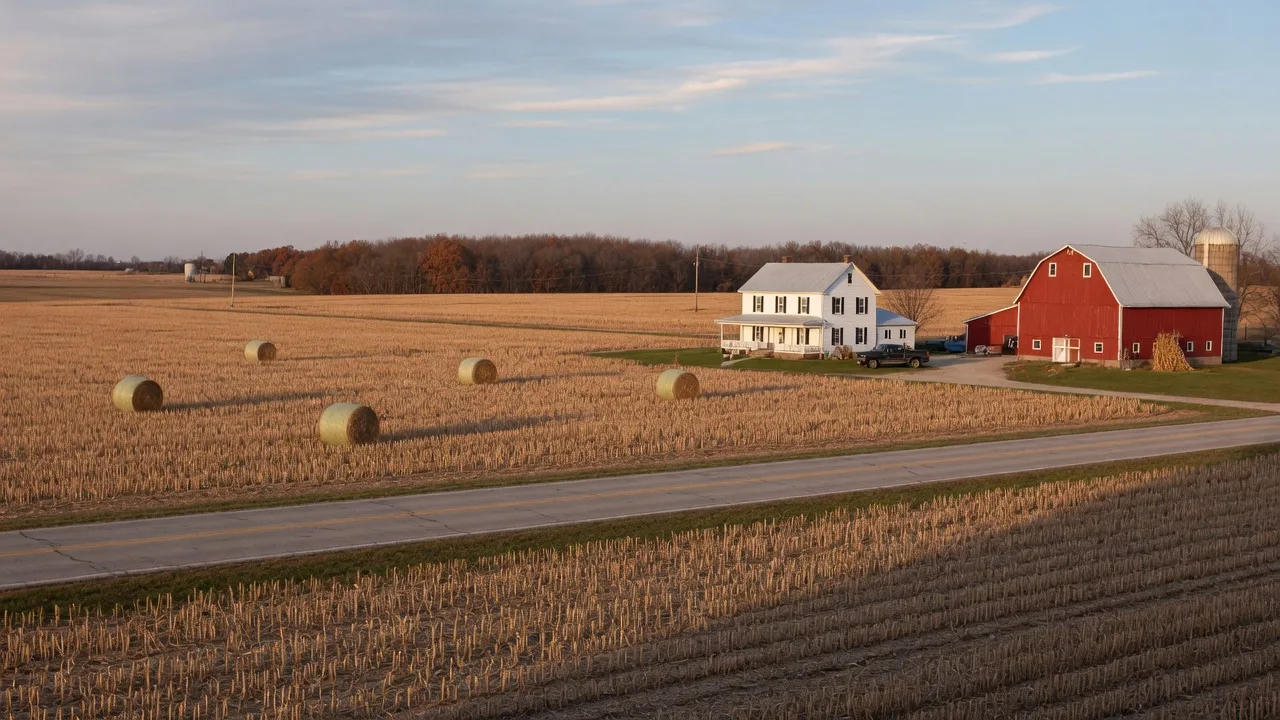
The acreage you buy may already be enrolled in CAUV, and that changes the tax math on the whole property.
If you are buying or selling acreage in and around Wilmington, the property tax bill is probably not the first number you studied, but it is one of the most predictable ones. The reason is CAUV, Current Agricultural Use Value, an Ohio program that has been on the books since 1973 and is quietly behind most rural tax bills in this part of the state. Understanding it before you make an offer can save you from a surprise at the closing table, and understanding it before you list can protect the value you have built.
This guide explains what CAUV is, how the per-acre value is actually calculated, which counties are affected by the 2026 changes, how to apply, and what happens when farmland leaves the program, including the three-year recoupment that catches many buyers off guard. The numbers below come from the Ohio Department of Taxation, the county auditor offices, and the Ohio Farm Bureau, all linked at the bottom of the article.
This is general education, not tax or legal advice. CAUV is applied county by county, so the county auditor for the property's address is always your first call. Our land price guide covers what acreage actually sells for across the three counties, and the Clinton County, Greene County, and Highland County pages map out the communities where this farmland sits.
What is CAUV, and how does it lower the tax bill on farmland?
Ohio voters created Current Agricultural Use Value (CAUV) by constitutional amendment in 1973 so that land devoted to commercial agriculture would be taxed on what it is worth as farmland, not on what it might bring if sold for houses. Without the program, farmland next to a growing town would be taxed at residential development value, and the bill could push working farms out of production.
Under CAUV, qualifying land is valued at its agricultural use value, and the tax is computed on that lower number. Two details matter when you look at a farm's tax bill. First, only the land in commercial agricultural use gets the CAUV value: the house site, the yard, and the outbuildings are still assessed at market value. Second, the program is not automatic. The owner applies to the Clinton County Auditor, the Greene County Auditor, or the Highland County Auditor, and renews every year, and the benefit stays attached to the land, not the person who owns it.
Most of the rural parcels we see across the country and acreage market, especially 5-acre and 20-acre properties outside town limits, sit on land that has been farmed for generations, which is exactly the situation CAUV was built for. Our county property tax comparison shows how much the overall bill varies across the three counties, and CAUV is one of the biggest levers inside that variation.
How is the per-acre CAUV value actually calculated?
The Ohio Tax Commissioner publishes the annual CAUV land tables under Ohio Administrative Code Chapter 5703-25, and every county auditor uses those tables to set the value on enrolled parcels. The core idea is income capitalization: the state estimates the net income the land can produce, then divides that by a capitalization rate to arrive at a value per acre.
The inputs are grounded in Ohio's actual farming. The tables use roughly 3,500 soil map units with productivity ratings, a state crop mix of about 37% corn, 57% soybeans, and 6% wheat on most soils, and crop prices and production costs averaged over the previous seven years, dropping the highest and lowest year and averaging the remaining five. The capitalization rate has climbed from about 6.2% in 2014 to roughly 8% today, which is a big part of why CAUV values have been coming down even as farmland market values have held.
Table 1. Ohio CAUV per-acre values by land class from the Ohio Department of Taxation's current land tables. The 2025 tables set minimums of $350 an acre for cropland and pasture on gentler slopes and $230 an acre for woodland; the 2026 tables, which apply to counties on the current reappraisal cycle, are trending down roughly 5% overall and now value permanent pastureland at the $230 woodland floor.
| Land class | Current table value | Notes |
|---|---|---|
| Cropland, slopes 25% or less | From about $350/acre minimum (2025), higher on productive soils | Set by soil productivity and the state's corn, soybean, and wheat mix |
| Pasture, slopes 25% or less | About $350/acre minimum (2025) | Must be in commercial livestock or forage use |
| Permanent pasture (grazing, not in rotation) | About $230/acre, the 2026 woodland floor | New for the 2026 reappraisal cycle |
| Woodland, slopes 25% or less | About $230/acre minimum | Cropland value minus clearing and drainage costs, with a $230 floor |
| Pasture and woodland, slopes over 25% | About $230/acre | Steeper ground carries the lower floor |
Read those numbers against a residential lot and the gap is the whole point of the program: a tax bill built on a few hundred dollars an acre of agricultural value instead of a market value that can run into the thousands per acre. For the full picture of what those market values look like in this area, our what an acre costs guide breaks down farmland and rural homesite pricing across the three counties.
Which counties are affected by the 2026 CAUV changes?
CAUV values are not reset everywhere at once. Ohio recalculates them in a county's reappraisal year and refreshes them at each triennial update, so the table year that applies depends on the county's cycle. That is why the same table can be current for a property on one side of a county line and not the other.
Of the three counties in this article's coverage, Greene County is on the 2026 sexennial reappraisal, its first full reset since 2020. Clinton County is not on the 2026 reappraisal list; its values refresh with its 2026 triennial update, and its next full reappraisal is scheduled for 2030. Highland County's most recent reset came with its 2024 reappraisal, with a triennial update next in 2027.
Table 2. How the CAUV tax cycle lines up across Clinton, Greene, and Highland counties, Ohio, based on the Ohio Department of Taxation's 2026 to 2031 reappraisal schedule, with the county auditor resource for each county's CAUV applications and parcel records.
| County | Last reappraisal | Current 2026 status | CAUV application window | Auditor CAUV resource |
|---|---|---|---|---|
| Clinton County | 2023 | Triennial update refreshes CAUV values; next full reappraisal 2030 | Apply after Jan 1; renew by the first Monday in March | clintoncountyauditor.org/cauv |
| Greene County | 2020 | On the 2026 sexennial reappraisal | Confirm the current window and fee with the auditor | greenecountyohio.gov CAUV page |
| Highland County | 2024 | Values from the 2024 reappraisal; triennial update next in 2027 | Apply after Jan 1; renew by the first Monday in March | highlandoh-auditor CAUV page |
The 2026 change that matters most for farm and acreage buyers: values across the counties on the current cycle are trending down about 5%, and permanent pastureland that is used for grazing rather than crop rotation now values at the $230 woodland floor. The Ohio Farm Bureau called the 2026 updates good news for livestock and pasture operations, which means a lower agricultural value on that kind of land going forward. For the broader 2026 property value picture in Clinton County, including the triennial value increase and how to appeal through the Board of Revision, see our triennial update guide.
How do I apply for CAUV, and what qualifies?
The basic test for CAUV is commercial use, not hobby use. Land must be devoted exclusively to commercial agriculture and generally contain 10 or more acres exclusive of the homesite. Smaller tracts, including parcels under 10 acres, can qualify if they produce at least $2,500 in average annual gross farm income. The land also has to have been in commercial agricultural use for the three years before the application, per Ohio Revised Code Section 5713.30.
The mechanics are simple but deadline-driven. The initial application, DTE Form 109, is filed with the county auditor after January 1, with a fee around $25 (the Clinton County Auditor and Highland County Auditor both list $25; confirm the current fee with the Greene County Auditor). Every year after that, the owner files the DTE Form 109A renewal, which is mailed to enrolled owners, carries no fee, and must be returned by the first Monday in March. Miss the renewal and the land is removed from the program.
Here is the part that matters for a transaction: CAUV does not transfer automatically with a deed. When land changes hands, the new owner must file to keep the program active. A buyer who assumes the benefit survives the closing could find the parcel back at market value, and a missed renewal is one of the most common triggers of the recoupment charge described next.
What happens when farmland leaves CAUV or is sold? (The recoupment)
When land leaves CAUV, whether because it is converted to a non-agricultural use, withdrawn voluntarily, or the annual renewal is not filed, the county auditor adds a recoupment charge to the property tax bill. The charge equals the prior three years of tax savings, computed as the difference between the market value and the CAUV value for each of the previous three tax years. For a parcel that has been in the program for years, that can be a meaningful bill, and it is levied on the land, so it follows the property.
Partial conversions are handled tract by tract. A parcel can stay enrolled on the acreage that remains in commercial agriculture while the converted portion, say the acre you intend to build on, is removed and recouped separately. The auditor determines whether a conversion has occurred, so a plan to split, build, or change the use of part of an enrolled parcel should be discussed with the auditor before the deed is done, not after.
Table 3. How a CAUV value compares to a market value for the same land, using the current CAUV table floors and the farmland and homesite benchmarks from our land price guide for Clinton, Greene, and Highland counties. Every parcel is different, and the county auditor sets the actual values on a specific property.
| Land | CAUV value (current tables) | Market value reference (our land price guide) |
|---|---|---|
| Tillable cropland | About $350/acre and up by soil | Roughly $8,000+ an acre as tillable farmland |
| Woodland | About $230/acre minimum | Varies widely by timber, access, and location |
| Permanent pasture (2026) | About $230/acre, the woodland floor | Typically priced with other rural land |
| Homesite and yard | Not eligible; assessed at market value | Can exceed $30,000/acre in some rural home markets |
The market value column is drawn from our own what an acre costs guide, which pulls its farmland benchmarks from the USDA and Ohio State University Extension. The point of the comparison is not the exact numbers, it is the order of magnitude: the same ground that carries a market value in the thousands can be taxed on an agricultural value in the hundreds, but only while it stays enrolled. That gap is both the benefit and, at the moment of conversion, the recoupment.
What we tell acreage buyers and sellers at Glasshouse Realty
In our experience helping buyers and sellers of rural acreage across Clinton, Greene, and Highland counties, three CAUV details come up on nearly every farmland transaction. None of them are secrets, but they are the details that most often surprise someone moving from a subdivision.
1. The tax bill reflects the CAUV value, not the sale price
Buyers new to country living often assume a farm's property tax will scale with what they paid for it. A farm that has stayed in the program can carry a bill based on an agricultural value far below the purchase price. On every acreage purchase we pull the current year's tax bill and the auditor's parcel record before a buyer falls in love with a budget number.
2. The seller's CAUV paperwork should change hands
We ask sellers for the CAUV application and the most recent renewal so the buyer knows the program is current. A lapse resets the parcel to market value and can trigger the recoupment, so the paperwork is as important as the well log and the septic permit on a rural property.
3. Plans to convert land change the math
If a buyer intends to build on, split, or stop farming a portion of an enrolled parcel, the recoupment on that portion is a real line item to model before the offer, not after. We flag it the same way we flag well and septic inspection timing, because both show up on the same closing calendar.
These are the practical checks we run on rural listings in our office, and they pair naturally with the well and septic guide and the Wilmington FAQ, which already answers the neighboring questions about rural property, taxes, and utility setup.
Practical takeaways for buyers and sellers
For buyers: pull the tax bill and parcel record early
Ask your agent for the current year's actual tax bill on any shortlisted rural property, then confirm the parcel's CAUV status with the county auditor. The real bill beats any estimate, including the tables in this article.
For buyers: ask for the CAUV file and confirm the renewal
The program does not transfer with the deed. Get the application and the most recent renewal from the seller, and plan to file your own renewal by the first Monday in March if you intend to keep the land in commercial agricultural use.
For sellers: keep the paperwork current and share it
A documented, current CAUV file is a genuine selling point for farm and acreage buyers because it lets them budget the real tax bill. A lapse, by contrast, turns into a negotiation issue at the worst possible time.
For anyone converting land: budget for the recoupment
If any portion of an enrolled parcel will leave agricultural use, model the three-year recoupment before you commit. The auditor can tell you the exact calculation for the tract in question.
Confirm the current year with your county auditor
CAUV values, fees, and deadlines change yearly and vary by county. The tables and cycle information in this article are a planning tool; the auditor's parcel record is the source of truth for any specific address.
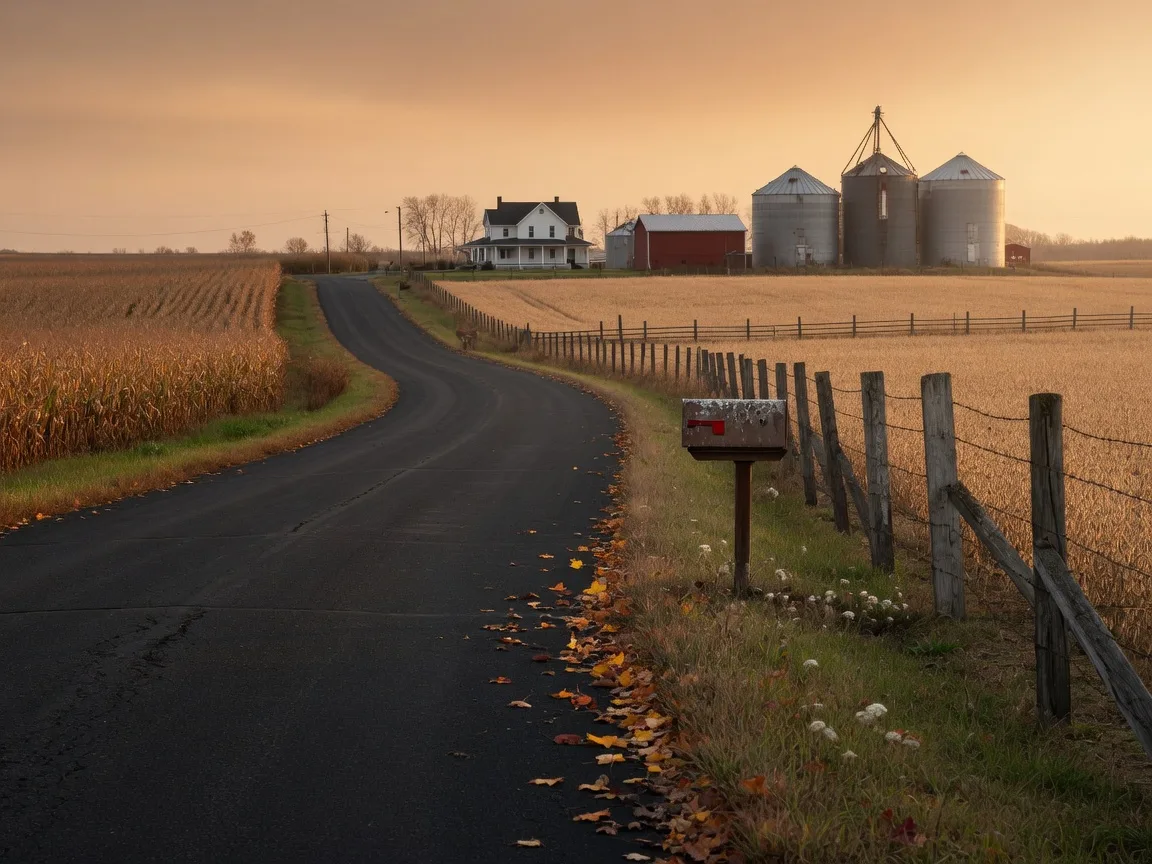
The parcels that carry a CAUV value are the working ground off the county roads, not the homesite itself.
CAUV questions farmland buyers and sellers ask us most
What is CAUV in Ohio, and who qualifies?
CAUV, Current Agricultural Use Value, is an Ohio program created by constitutional amendment in 1973 that values land devoted to commercial agriculture at its agricultural use value instead of its full market value, which lowers the property tax bill on working farmland. Land generally must contain at least 10 acres in commercial agricultural use exclusive of the homesite, or a smaller tract producing at least $2,500 in average annual gross farm income, and it must have been in commercial agricultural use for the three years before the application. Owners apply through their county auditor.
How much is the CAUV value on farmland in Clinton, Greene, or Highland County right now?
In the current Ohio Department of Taxation tables, cropland and pasture on gentler slopes carry a minimum CAUV value of about $350 an acre and woodland about $230 an acre. The 2026 tables are trending down roughly 5% and now value permanent pastureland at the $230 woodland floor. The exact value for a specific parcel depends on soil productivity and the county's reappraisal cycle, so check the county auditor's parcel record.
Do I have to pay back CAUV tax savings if I buy land that is in the program?
Only if the land leaves the program. When a parcel is converted out of CAUV, withdrawn, or the annual renewal is not filed, including by a new owner, the county auditor adds a recoupment charge to the tax bill equal to the prior three years of tax savings. A buyer who keeps the land in commercial agricultural use and files the renewal avoids the charge; a buyer who converts any portion should plan for it.
When do I apply for CAUV, and what does it cost?
File the initial application, DTE Form 109, with the county auditor after January 1, with a fee around $25 in Clinton and Highland counties (confirm the current fee with the Greene County Auditor). The annual renewal, DTE Form 109A, must be returned by the first Monday in March each year and carries no fee. The program does not transfer automatically with a deed, so a new owner must file to keep it active.
Are the house and yard included in CAUV, or do they pay market-value taxes?
The house site, yard, and outbuildings are assessed at market value. Only the land actually in commercial agricultural use receives the CAUV value, so a farm's tax bill is a mix: a low agricultural value on the productive ground and a market value on the homesite and improvements.
Where can I verify CAUV values and a parcel's enrollment for myself?
Start with your county auditor: the Clinton County Auditor CAUV page , the Greene County Auditor CAUV page , and the Highland County Auditor CAUV page . The Ohio Department of Taxation publishes the annual tables and the county reappraisal schedule, and the Ohio Farm Bureau publishes plain-language updates when the rules change.
Want to see how the tax picture interacts with the rest of an acreage budget? The county property tax comparison and the Wilmington property tax guide cover the residential side of the bill, the well and septic guide covers the utility side, and the Market Report tracks what rural and in-town properties are actually selling for this season.
Authoritative sources referenced in this guide
- Ohio Department of Taxation, 2026 CAUV land tables and explanation
- Ohio Department of Taxation, 2025 CAUV land tables and explanation
- Ohio Farm Bureau, 2026 CAUV updates
- Ohio Department of Taxation, county reappraisal and triennial schedule 2026 to 2031
- Ohio Department of Taxation Bulletin 26, CAUV and recoupment guidance for county auditors
- Ohio DTE Form 109A, annual CAUV renewal application
- Clinton County Auditor, CAUV program
- Greene County Auditor, CAUV program
- Highland County Auditor, CAUV program
How we help with farmland and acreage
We live and work in this community, and we sell enough acreage to know which questions separate a smooth rural closing from a painful one. When you tour a property, we will tell you to ask about CAUV the same way we tell you to ask about the well and septic, and we keep the auditor records, tax bills, and inspection timelines straight so nothing lands on you by surprise at the closing table.
Buying or selling acreage near Wilmington?
Call or stop in to the Glasshouse Realty Wilmington office. We will pull the tax bill, the parcel record, and the CAUV file for any property on your list, no pressure.
Figures in this guide are drawn from the public sources linked above, they change each year, and every parcel is different. CAUV values, fees, application windows, and recoupment calculations are set under Ohio law and applied by each county auditor, so verify the current year's tables, deadlines, and a specific parcel's status with the county auditor before making decisions. This article is general education, not tax, legal, or financial advice, and it does not estimate or replace an appraisal of any property. Consult a qualified tax professional or attorney for your situation before you act.
Glasshouse Realty is committed to fair housing: we do not discriminate on the basis of race, color, religion, sex, national origin, familial status, disability, or any other protected class, and nothing in this article rates, ranks, or steers buyers on the basis of any protected characteristic. Buyers and sellers are free to choose their own tax professionals, attorneys, appraisers, and title providers, and you are never obligated to use any provider we mention or recommend.