Clinton County's 2026 Triennial Update: A 22% Average Value Increase and What It Means for Your Tax Bill
The Clinton County Auditor released state-ordered 2026 triennial update values in late May 2026, reflecting an average increase of about 22% in real estate values across the county. The catch that most homeowners miss: a 22% value increase does not automatically mean a 22% tax bill increase, because Ohio's H.B. 920 tax reduction factor offsets value gains on existing voted levies. Your bill can still rise for specific, identifiable reasons, and if you believe your value is wrong, the formal appeal window runs January 1 to March 31, 2027 through the Clinton County Board of Revision.
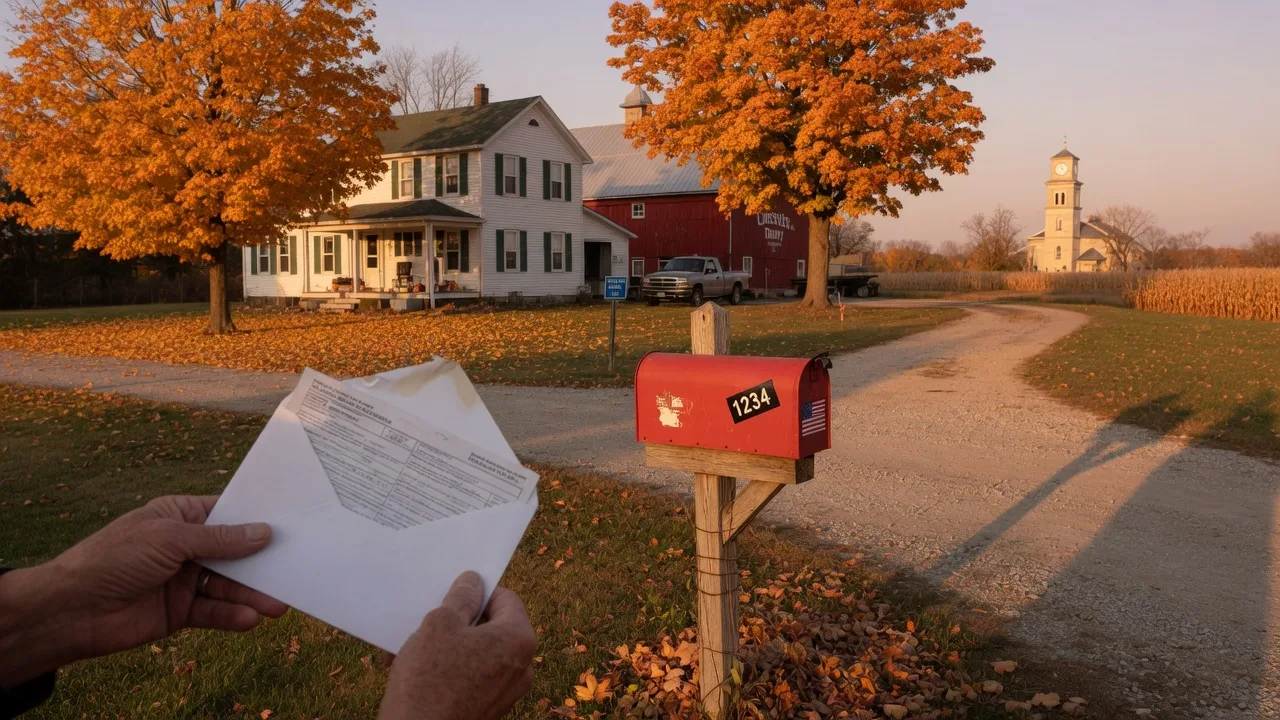
A new value on the parcel record is not the same thing as a higher tax bill. The difference is H.B. 920.
If you own a home in Clinton County, your property's value on the county's books changed this year. In late May 2026, the Clinton County Auditor released the tentative results of the state-ordered 2026 triennial update, and the state set an average real estate value increase of about 22% for the county based on sales over the previous three years. The new values took effect January 1, 2026, which means the bills you pay in calendar year 2027 are the first ones built on them.
This is not a mistake and it is not a new tax. Ohio law requires every county to revalue property on a set cycle, and Clinton County's last full revaluation was completed in 2023. The triennial update that followed is the statistical adjustment Ohio mandates three years after each full reappraisal, and it is how the county keeps assessed values roughly in line with what homes are actually selling for. The neighbors across the line in Greene and Highland counties are on the same cycle, one step behind Clinton County's.
In our work helping Wilmington-area buyers and sellers sort out tax questions, the single most common misconception we hear is that a 22% value increase means a 22% tax increase. It does not, for most homeowners. This guide explains what the triennial update actually did, when your bill really changes, how to read your new value, and exactly how to appeal if the county's number is wrong. We are an objective data source here, not a tax adviser: the mechanics below come from the Ohio statutes, the county auditor, and the Ohio Legislative Service Commission, and we link every one so you can verify it yourself.
What exactly did the 2026 triennial update do?
Ohio assesses real property at 35% of its true (market) value, and the county auditor is responsible for keeping assessed values close to market. Counties follow a six-year cycle: a full sexennial reappraisal, in which the auditor revalues and inspects every parcel, followed three years later by a triennial update, a statistical adjustment based on recent sales and market trends without re-inspecting each property. The cycle is set by the Ohio Department of Taxation, and about one-third of Ohio's counties go through a reappraisal or update each year.
For Clinton County, the full reappraisal was completed in 2023, and the 2026 triennial update was ordered with an average value increase of about 22%, reflecting three years of local sale activity. That does not mean every home went up 22%. Some parcels rose more and some less or not at all, and the 22% is the countywide average the state ordered. What matters to you is the number on your own parcel record, not the county average.
Where does each county stand on the reassessment cycle?
Because Ohio staggers counties across three groups, Clinton, Greene, and Highland are at different points on the same six-year cycle. The table below shows where each county sits, from the Ohio Department of Taxation sexennial schedule and each county auditor's published announcements.
Table 1. Property value reassessment cycle for Clinton, Greene, and Highland counties, based on the Ohio Department of Taxation sexennial reappraisal schedule and each county auditor's public announcements.
| County (county seat) | Last full reappraisal | Current triennial update | State-ordered average change | New values take effect |
|---|---|---|---|---|
| Clinton (Wilmington) | 2023 | 2026, released for review late May 2026 | About +22% (state-ordered) | Jan 1, 2026; bills payable in 2027 |
| Greene (Xenia) | 2024 | Next update in 2027; valuation letters and informal reviews in 2026 | Varies by area | 2027 cycle |
| Highland (Hillsboro) | 2024 | Next update in 2027 | Varies by area | 2027 cycle |
The takeaway for anyone shopping across county lines: Clinton County's 22% adjustment is already baked into the parcel records you will look up today, while Greene and Highland values will move on their own 2027 update. Our county property tax comparison shows how the rates themselves differ, and the Wilmington property tax guide walks through the full Ohio bill math step by step.
Does a higher value automatically mean a higher tax bill?
Here is the part that surprises most homeowners, and it is the reason a 22% value increase does not equal a 22% tax increase. Since 1976, Ohio's H.B. 920 has required the county auditor to apply a tax reduction factor every year: when property values in a class rise, the effective millage rate on each existing voted levy is cut back so the levy collects roughly the same total dollars as the year before. In plain terms, the rate drops to offset the value gain, so the portion of your bill that comes from existing voted levies stays close to flat.
That is the main reason a big assessment jump rarely produces a matching bill jump for most Ohio homeowners. The reduction factor is not a cap on your whole bill, though. Three situations can still push your bill up, and we see all three in Clinton County:
1. Unvoted "inside" millage is not offset
The reduction factor applies to voted levies. The county, township, and city unvoted inside millage is not reduced, so your bill rises with the value on that portion. This is one reason Clinton County's 2025 cut of its inside millage from 3.0 to 2.5 mills mattered: it gave the countywide bill some room before the 2026 value update landed.
2. Newly voted levies tax the full new value
A new levy passes at its full voted rate on the current (higher) value. If a school, township, or city levy renewal or new levy is on your ballot and passes, it is charged on the 2026 updated values, and that can raise your bill beyond what the reduction factor would have limited.
3. Districts already at the 20-mill floor
Ohio sets a 20-mill floor for a school district's current operating-expense levies. Once a district is at that floor, the reduction factor can no longer lower its levies, so further value growth converts more directly into higher bills and higher school revenue. Some Clinton County districts run at or near that floor, which is a mechanical tax fact about the levy, not a comment on any district's performance.
The mechanics above come from the Ohio Legislative Service Commission's brief on the property tax reduction factor and its brief on voted property tax levies, and Ohio is adding a state-funded credit in 2026 aimed at limiting total property-tax growth in districts sitting at the 20-mill floor. If you want to know exactly how these rules land on your address, the fastest path is your parcel record and a conversation with the auditor's office.
What actually moves your tax bill?
The table below separates what raises a bill from what does not. It is the same checklist we walk through with sellers and buyers when a new value or a new bill arrives, so you can see at a glance which line to investigate.
Table 2. How each factor affects a property tax bill in Ohio, based on Ohio Revised Code and the Legislative Service Commission's explanation of H.B. 920 and the 20-mill floor.
| Factor | Raises the bill? | Why |
|---|---|---|
| Higher value on existing voted levies | Usually no | H.B. 920 reduction factor cuts effective millage so the levy collects about the same dollars |
| Unvoted inside millage | Yes | Not covered by the reduction factor; it rises with the value |
| Newly voted levy or bond | Yes | Charged at full voted rate on the current, higher value |
| District already at the 20-mill floor | Yes | Levies cannot be reduced below 20 mills, so value growth raises the bill |
| New construction | Later, yes | Assessed on land value while building, then adjusted once improvements are complete |
| Purchase of an existing home | Sometimes | A sale can trigger a reappraisal that updates the assessed value to the sale price |
For buyers, this is why the tax line on a home you are considering needs its own look, not a guess from a national website. Two homes at the same price can sit in different districts with different levies, and the 2026 update changed the baseline for every Clinton County address. The cost-of-living page folds taxes into the full monthly picture, and the Market Report tracks where values and prices in the county stand.
How do I find my new value and read my parcel record?
Your new 2026 value is public and free to look up. Search the parcel records on the Clinton County Auditor's website by address or owner, and you will see the appraised (market) value, the assessed value at 35%, the millage on the parcel, and the current tax figures. If you prefer the phone, the auditor's office can be reached at (937) 382-2250. For properties across the county lines, use the Greene County Auditor or Highland County Auditor search.
When the 2026 values were released in late May, the auditor's office also offered free informal value review meetings where owners could sit down with appraisal staff and ask questions about their new number. Those sessions for the 2026 update have now passed, but the same informal-review option exists on every update cycle, and the formal appeal route below is open every year for the current tax year.
How do I appeal my assessment through the Board of Revision?
If you believe the county's value on your property is wrong, Ohio gives you a formal, free-to-file path: a complaint with the county Board of Revision, which sits in the auditor's office and is made up of the county auditor, the county treasurer, and a county commissioner (or their designees). You file DTE Form 1, the "Complaint Against the Valuation of Real Property," available from the auditor or the Ohio Department of Taxation, along with your parcel number, the auditor's current value, and the value you believe is correct.
The appeal checklist
- Know the window: under Ohio Revised Code 5715.19, complaints are accepted from January 1 to March 31 of the year after the tax year. For the 2026 tax year, that means January 1 to March 31, 2027. Late filings are not accepted.
- Sign before a notary: the Clinton County Board of Revision requires the DTE 1 (or DTE 1M) complaint to be signed before a notary.
- Bring evidence, not opinions: the board wants data showing the value is below the assessment. Three to five comparable sales of similar homes, a professional appraisal, and photos or repair estimates documenting condition are the standard evidence.
- You can only contest the value: not the tax rate, the millage, or the levies. The complaint challenges valuation only.
- Know the next step: if you disagree with the board's decision, you can appeal to the Ohio Board of Tax Appeals within 30 days of the decision notice.
One caution the auditor has published directly: beware of private firms that mail or advertise a "guaranteed" property tax reduction for a fee. Nobody can guarantee the outcome of an appeal, because the value must be supported by evidence, and you can file the complaint yourself. If a company's pitch sounds too good to be true, check it against the auditor's published warnings before you pay anyone anything.
What the 2026 update means for buyers and sellers in Wilmington
For buyers, the 2026 update is a reason to price property tax into every offer, not to fear it. Because most of a bill comes from voted levies that H.B. 920 holds roughly flat, a higher assessed value does not automatically mean a punishing bill. But it does mean the parcel record you look at today is current, and the district, the inside millage, and any pending levy on the ballot decide the real number. Ask us for the tax line on any property you are comparing, and we will pull the current parcel record with you.
For sellers, the updated value can shape how a buyer reads the long-term cost of owning your home, which is exactly why we review the current tax figures on every listing we prepare and factor them into pricing and marketing. A home with a clean, understood tax picture is easier for a buyer to say yes to than one with a surprise waiting on the first bill. If a new value looks high to you, the informal review and the appeal window are legitimate tools, and we are glad to point you to the right office for your address.
More context lives in the Wilmington property tax guide, the county-by-county comparison, and the Wilmington FAQ. Our Clinton County, Greene County, and Highland County guides cover each market's character, inventory, and carrying costs.
Triennial update questions we hear most
Will my tax bill go up 22% because my Clinton County value went up about 22%?
Usually not by 22%. Ohio's H.B. 920 tax reduction factor requires the county auditor to cut the effective millage on existing voted levies when values rise, so those levies collect roughly the same total dollars as before. Your bill can still go up for specific reasons: unvoted inside millage is not offset, a newly voted levy taxes at its full rate on the higher value, and districts already at the 20-mill school floor see value growth translate more directly into higher bills.
How do I look up my new 2026 property value in Clinton County?
Search the free parcel records on the Clinton County Auditor's website at clintoncountyauditor.org, or call (937) 382-2250. The 2026 triennial values were released for public review in late May 2026 and took effect January 1, 2026, so the bills payable in calendar year 2027 are the first based on them.
When is the deadline to appeal my 2026 Clinton County assessment?
For tax year 2026, the formal appeal window runs from January 1 to March 31, 2027. File DTE Form 1 with the Clinton County Board of Revision, signed before a notary. Late filings are not accepted for that tax year, so put the deadline on the calendar now.
What evidence do I need to appeal my property value in Ohio?
You need data showing the property's value is below the county's assessed value, not an opinion that taxes are too high. Common evidence includes three to five recent comparable sales of similar homes, a professional appraisal, and photos or repair estimates documenting condition issues.
Can I appeal my property tax rate or levies?
No. A Board of Revision complaint can only challenge the property's valuation, not the tax rate, millage, or voter-approved levies. If you disagree with the board's valuation decision, you can appeal to the Ohio Board of Tax Appeals within 30 days of the decision notice.
Are the companies that promise a guaranteed tax reduction legit?
Be cautious. The Clinton County Auditor has publicly warned property owners to beware of private firms that mail or advertise guaranteed reductions for a fee. You can file an appeal yourself with DTE Form 1, and the auditor's office offers free informal review meetings. No one can guarantee the outcome, because the value must be supported by evidence.
Authoritative sources referenced in this guide
- Clinton County Auditor: tentative state-ordered triennial update of real property (22% average increase, informal review dates, scam warning)
- Wilmington News Journal: Clinton County tentative property values available for public review
- Clinton County Auditor: Board of Revision (DTE Form 1 process, notarized filing, Jan 1 to Mar 31 window)
- Ohio Revised Code 5715.19 (Board of Revision complaint deadline)
- Ohio Legislative Service Commission: property tax reduction factor
- Ohio Legislative Service Commission: voted property tax levies (the 20-mill floor)
- Ohio Legislative Service Commission: the triennial update
- Ohio Department of Taxation: year of sexennial reappraisal and triennial update schedule
- Greene County: property revaluation FAQ
- Highland County Press: Highland County property tax reappraisals reviewed
How we help with the tax picture on a home
We live and work in Wilmington, and we review the actual tax figures on every property we show and every listing we prepare. When a new value or a new bill arrives, we are glad to walk you through the parcel record, point you to the right county office, and explain what the number means for your decision, no pressure and no jargon.
Want to understand the tax line on a home you are considering?
Call or stop in to the Glasshouse Realty Wilmington office. We will pull the assessed value and current bill with you and set up honest numbers, no pressure.
Figures in this guide come from the Clinton County Auditor's published 2026 triennial update announcement, the Wilmington News Journal, the Ohio Department of Taxation's reappraisal schedule, and the Ohio Legislative Service Commission's briefs on the property tax reduction factor, voted levies, and the triennial update, all linked above. A specific address can differ from the county average, and the exact effect on your bill depends on your parcel's value, its millage, and any levies. This article is general education, not legal, tax, or financial advice. For your own situation, verify your parcel with the county auditor and talk to a qualified tax professional, your settlement officer, and your lender before making decisions.
Glasshouse Realty is committed to fair housing: we do not discriminate on the basis of race, color, religion, sex, national origin, familial status, disability, or any other protected class. This article is an objective explanation of how Ohio property tax value updates and appeals work; it does not rate, rank, or steer on any neighborhood, school district, or community, and buyers and sellers are free to choose their own appraisers, tax professionals, and any other service providers.