Property Taxes in Clinton, Greene & Highland Counties: Where a $250,000 Home Pays the Most
Across the three counties Glasshouse Realty serves, the same $250,000 home can carry a property tax bill that differs by roughly $1,500 a year. Greene County runs the highest of the three, with a median effective rate near 1.74%, or about $4,350 a year on a $250,000 home. Clinton County sits near 1.19%, about $2,975 a year, and Highland County near 1.13%, about $2,825 a year. The gap is driven mostly by school district millage, not county government. Here is the county-by-county breakdown, what drives the difference, and what to check before you buy across county lines.
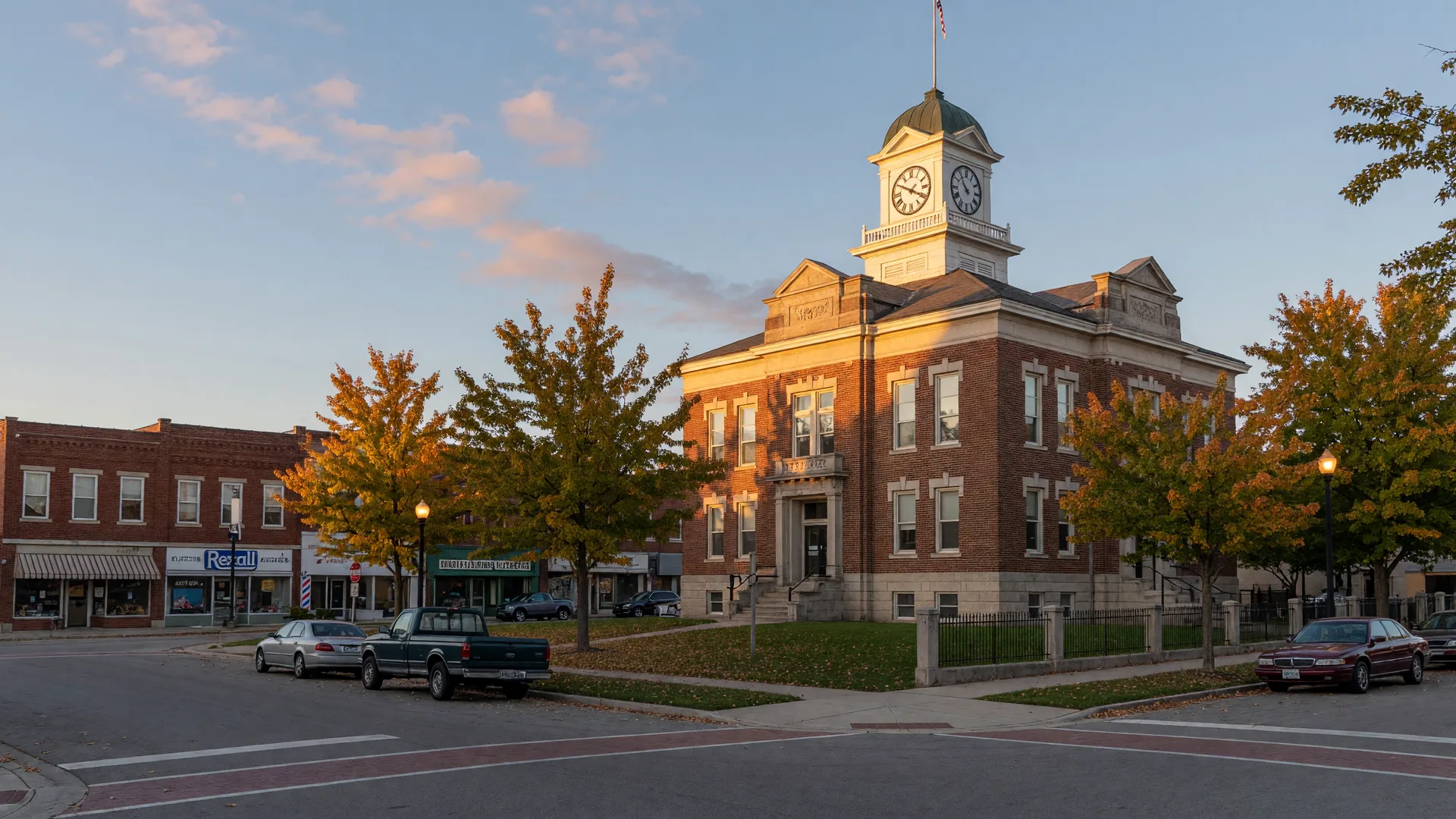
Your tax bill is set by your county, your township or city, and your school district, not by the price tag alone.
How do the three counties compare on property taxes right now?
Buyers searching across Clinton County, Greene County, and Highland County often assume the tax bill follows the home price. It does not. Two homes sold for the same dollar amount can carry bills that differ by more than a thousand dollars a year depending on which county, township, and school district the address falls in.
The table below uses countywide median effective rates (the share of home value paid in property tax each year) reported by Ownwell and tax-rates.org for 2025 to 2026, cross-checked against each county's published millage. Effective rate is the cleanest way to compare counties because it already accounts for Ohio's 35% assessment ratio.
Table 1. Median effective property tax rate and estimated annual bill on a $250,000 home in Clinton, Greene, and Highland counties, based on countywide median effective rates reported by Ownwell and tax-rates.org for 2025-2026.
| County (county seat) | Median effective rate | Est. annual bill on $250,000 | Est. monthly | What moves the number |
|---|---|---|---|---|
| Clinton (Wilmington) | ~1.19% | ~$2,975 | ~$248 | County inside millage cut from 3.0 to 2.5 mills for tax year 2025; homes inside Wilmington City run higher, near 1.48% |
| Greene (Xenia) | ~1.74% | ~$4,350 | ~$363 | Xenia Community City School District runs about 72.7 gross mills; district millage varies widely across the county |
| Highland (Hillsboro) | ~1.13% | ~$2,825 | ~$235 | Lowest of the three counties; bills vary across the five districts serving the county |
The spread is real money: a $250,000 home pays roughly $1,375 to $1,525 more per year in Greene County than in the other two, about $115 to $127 a month. Over a 30-year mortgage at a flat rate, that compounds into a five-figure difference in total cost. For buyers comparing a home in Wilmington against one in Xenia or Hillsboro, the tax line belongs in the monthly budget alongside the mortgage payment.
These are countywide medians, and a specific address can sit well above or below them. Our Wilmington property tax guide walks through the full Ohio math, and the $250,000 price comparison shows how the same budget plays out across Clinton County towns.
How does Ohio calculate a property tax bill?
Ohio does not tax your home at full market value. By state law, residential property is assessed at 35% of its appraised value. That assessed value is multiplied by your total millage and divided by 1,000; one mill equals $1 of tax for every $1,000 of assessed value. The effective rate is simply the annual bill divided by market value, which is why it is the fairest number for comparing counties.
A worked example at $250,000
Home appraised at $250,000, assessed at 35% = $87,500 of taxable value in every county.
At Clinton County's effective rate the bill lands near $2,975. At Greene County's rate it lands near $4,350. The formula is identical; the millage attached to the address is what changes the outcome.
Why does Greene County cost more than Clinton or Highland County?
The short answer is school district millage. Ohio school districts set most of the property tax on a home, and the districts in Greene County carry heavier voted levies than the typical district in Clinton County or Highland County. On Greene County's published 2025 tax schedule, Xenia Community City School District runs about 72.7 gross mills, and other Greene districts sit in a similar range depending on their levies.
By contrast, some Clinton County districts run at or near the 20-mill floor that Ohio law sets for voted school levies. Clinton-Massie Local School District, for example, operates at that floor with only a small separate bond millage, which keeps its school-related burden among the lowest possible under state law. Clinton County also trimmed its county inside millage from 3.0 to 2.5 mills for tax year 2025, a cut the Wilmington News Journal reported lowered countywide bills collected in 2026.
None of this is a judgment about any district. It is simply how the levies land. Because school millage is the biggest single driver, the district attached to an address matters more than the county line itself.
Which school districts set the levy in each county?
Every address in the three counties sits inside one of these districts, and the district's millage is the largest share of the bill. The lists below come from each county's official sources.
Table 2. Public school districts serving Clinton, Greene, and Highland counties, per each county's official sources.
| County | School districts |
|---|---|
| Clinton County | Blanchester Local, Clinton-Massie Local, East Clinton Local, Wilmington City |
| Greene County | Beavercreek City, Bellbrook-Sugarcreek Local, Cedar Cliff Local, Fairborn City, Greeneview Local, Xenia Community City, Yellow Springs Exempted Village |
| Highland County | Bright Local, Fairfield Local, Greenfield Exempted Village, Hillsboro City, Lynchburg-Clay Local |
For performance data, the Ohio Department of Education publishes report cards for every district in the state. We let the published data speak for itself, and our school district guide collects the district boundaries and what each one serves.
How do the commute times compare?
Property tax is only half the comparison. If you work in Dayton, Cincinnati, or Columbus, the drive time from each county seat is part of the same decision. The times below are typical non-rush-hour estimates from published travel calculators; morning and evening traffic adds minutes on the metro approaches.
Table 3. Typical drive times from Wilmington, Xenia, and Hillsboro to Dayton, Cincinnati, and Columbus, based on published travel-calculator data.
| Town (county) | Dayton | Cincinnati | Columbus |
|---|---|---|---|
| Wilmington (Clinton) | ~30-40 min downtown; southern suburbs under 30 min | ~25-30 min to Mason and West Chester; ~45 min downtown | ~45-50 min to Grove City; ~1 hr downtown |
| Xenia (Greene) | ~20-25 min via US-35 | ~1 hr via I-71 | ~1 hr to 1 hr 15 min via I-71 |
| Hillsboro (Highland) | ~1 hr 10-20 min via US-68 | ~1 hr 15 min via US-50 / SR-73 | Not verified in cited sources |
The pattern is clear: Xenia is the shortest drive to Dayton, Wilmington is the shortest drive to Cincinnati and Columbus, and Hillsboro sits roughly an hour from both Dayton and Cincinnati. Hillsboro to Columbus runs through Xenia and is the longest leg of the three; we left it out of the table because the cited travel calculators did not publish a verified figure for that pair.
Our full commute guide goes deeper on routes, traffic, and hybrid-work patterns, and the Clinton County, Greene County, and Highland County pages cover each market's character and inventory.
What should you check before buying across county lines?
In our experience helping buyers compare properties across the three counties, the tax line is the line most often underestimated on a first pass. Here is the checklist we run on every address before an offer, and you can run the same one yourself.
1. Look up the parcel in the county auditor's records
The Clinton County Auditor, the Greene County Auditor, and the Highland County Auditor each publish free property searches showing assessed value, millage, and the current annual bill. This is the single most reliable number you can get before making an offer.
2. Ask for the current owner's most recent full-year bill
The auditor record shows the bill as billed. The owner's actual paid bill can confirm nothing was missed, and it is a standard request your agent can make with any offer.
3. Check for levies heading to a ballot
School, township, and city levies appear on ballots throughout Ohio. A renewal keeps the bill steady; a new levy raises it. Your county board of elections publishes the current ballot, and it is worth a two-minute check before you commit to a budget.
4. Confirm the owner-occupancy credit after closing
Ohio's owner-occupancy credit is not always automatic after a purchase. Check your first full-year bill and confirm it appears; if it does not, one call to the county auditor usually fixes it.
5. Know how new construction is assessed
A brand-new home is typically assessed on land value while the build is underway, then adjusted once the improvements are complete. The first-year bill can feel low and step up after that, so plan for the post-build number.
For the rest of the monthly picture, our cost-of-living page adds utilities, insurance, and everything else a budget needs, and the Market Report tracks where prices in the region stand.
Property tax questions buyers ask us most
Which Ohio county has the lowest property taxes: Clinton, Greene, or Highland?
Of the three, Highland County runs the lowest median effective rate at about 1.13%, or roughly $2,825 a year on a $250,000 home. Clinton County sits near 1.19%, about $2,975 a year, and Greene County runs highest at about 1.74%, roughly $4,350 a year. Exact bills vary by township, city, and school district.
How much are property taxes on a $250,000 home in Greene County, Ohio?
At Greene County's median effective rate of about 1.74%, a $250,000 home carries an estimated annual bill near $4,350, roughly $363 a month. The number varies by district; Xenia Community City School District, for example, runs about 72.7 gross mills on Greene County's 2025 schedule.
Why are property taxes higher in Greene County than in Clinton County?
School district millage drives most of the difference. Greene County districts carry heavier voted levies, while some Clinton County districts run at or near the 20-mill floor Ohio law sets for voted school levies. Clinton County also trimmed its inside millage from 3.0 to 2.5 mills for tax year 2025, lowering countywide bills collected in 2026.
Do property taxes change when I buy a home in Ohio?
Yes, in a few ways. A sale can trigger a reappraisal that updates the assessed value, the owner-occupancy credit may need to be confirmed after closing, and new construction is typically assessed on land value first and adjusted once improvements are complete. Check your first full-year bill and confirm the credits appear.
Where can I look up the exact property tax bill on a specific home?
Use the county auditor's online records: the Clinton County Auditor, the Greene County Auditor, and the Highland County Auditor. Search the parcel address to see assessed value, millage, and the current bill.
Sources and where to verify a specific property
- Clinton County Auditor : property search, assessed values, and millage for Clinton County.
- Greene County Auditor and Greene County property search : assessed values and millage for Greene County.
- Greene County 2025 tax rates schedule : district-by-district gross and net mills.
- Highland County Auditor and property search : assessed values and millage for Highland County.
- Wilmington News Journal: Clinton County commissioners cut the property tax rate : the 3.0 to 2.5 mill inside-millage reduction for tax year 2025.
- Ownwell: Clinton County property taxes, Greene County, and Highland County : countywide median effective rates.
- Ohio Department of Education report cards : published performance data for every Ohio district.
- Commute times: published travel-calculator data for the Wilmington, Xenia, and Hillsboro routes to Dayton, Cincinnati, and Columbus.
How we help buyers compare across county lines
Every home is different, and the last thing you want is a tax surprise three months after closing. As locals who live and work in Wilmington, we review the actual tax figures on every property we show, and we are glad to estimate the annual bill on a home you are considering in any of the three counties before you write an offer.
Want the real tax picture for a home you are watching?
Call or stop in to the Glasshouse Realty Wilmington office. We will pull the assessed value and current bill, and set you up with honest numbers, no pressure.
Figures in this post are estimates based on countywide median effective rates reported by Ownwell and tax-rates.org for 2025 to 2026, Greene County's published 2025 millage schedule, and news reporting from the Wilmington News Journal. A specific address can sit well above or below the county median because township, city, and school district levies all differ. This post is general education, not legal, tax, or financial advice. For the exact bill on a property you are considering, check the county auditor's records and talk to your tax professional, title company, and lender before closing.