Historic Homes in Wilmington, Ohio: What to Know Before You Buy
Yes. Wilmington, Ohio has a deep stock of historic homes, from Victorian and Italianate houses near the downtown Courthouse Square to farmhouses on acreage across Clinton, Greene, and Highland counties. The trade-off is straightforward: older homes offer character, mature trees, and established neighborhoods that new construction cannot match, but they also carry older electrical, plumbing, and heating systems that demand a careful inspection and a realistic repair budget. Here is what to look for, where the historic districts are, and how to buy an old house well.
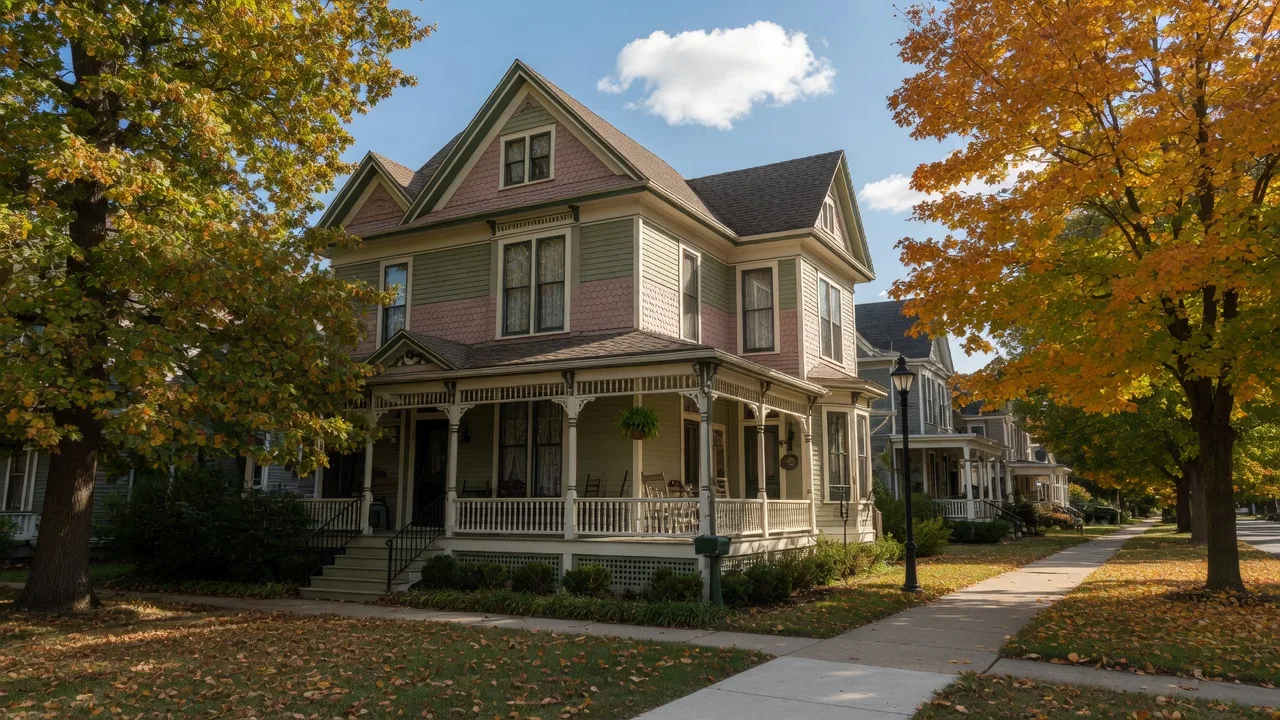
Victorian-era houses line the established streets near downtown Wilmington, much as they have for over a century.
If you have searched "historic homes in Wilmington Ohio" or "old houses in Clinton County," you have probably found the same thing we see every week in our downtown office: buyers who love the look and the location, then worry about the age. That worry is worth taking seriously, but it is manageable with the right inspection list, the right budget, and a local team that has sold these houses before.
In this guide we cover where the historic inventory actually sits, what it tends to cost and why, the systems that fail in nineteenth- and early twentieth-century homes, which renovation credits exist, and the practical takeaways for both buyers and sellers in Clinton, Greene, and Highland counties.
Where the historic homes are in Wilmington
Wilmington's oldest and most intact residential neighborhoods sit within a walk or a short drive of the Courthouse Square. The Wilmington Commercial Historic District anchors downtown, and the South South Street Historic District preserves one of the city's oldest residential streets. Together they give buyers a rare thing for an Ohio town this size: a genuine stock of Victorian, Italianate, and Queen Anne houses on tree-lined streets within walking distance of Main Street.
Clinton County holds about 18 National Register of Historic Places listings, and several of the most visible are in Wilmington itself. Rombach Place at 149 E. Locust St. was built in 1831 and now houses the Clinton County History Center, an easy stop if you want to understand how these neighborhoods were built. The Clinton County Courthouse, dedicated in 1919, is the centerpiece of the Square, and the Murphy Theatre on West Main Street opened in 1918 as a gift from Wilmington native and Chicago Cubs owner Charles Webb Murphy. The General Denver Hotel on North Mulberry Street, a 1928 Tudor Revival landmark named for General James W. Denver, marks the north edge of the historic core. The Historic Downtown Wilmington Walking Tour stops at all of them.
For the residential side of the market, our Downtown Wilmington neighborhood guide covers the walkable historic core, and the full neighborhoods guide maps which parts of town suit which buyers. Older homes also sit in village centers like Sabina, New Vienna, and Blanchester, where brick storefronts and frame houses from the 1800s still anchor the streets.
Historic homes beyond Wilmington: Greene and Highland counties
Wilmington stays our home base, but we serve buyers and sellers across the wider area, and the historic inventory extends well beyond Clinton County. In Greene County, Xenia holds the Downtown Xenia Historic District, roughly 60 buildings anchored by an 1835 Greek Revival former bank, plus the older East Second Street and Waterstreet districts. Yellow Springs has one of Ohio's best-known historic villages, a roughly 460-acre district with a mix of 1800s homes, Antioch College's historic campus, and Glen Helen at its edge. In Wilberforce, the Charles Young House, a National Historic Landmark built in 1832 and tied to the Underground Railroad, is now a national monument.
In Highland County, Hillsboro centers its historic character on the East Main Street Historic District and the landmark Highland County Courthouse, and the county's covered bridges, including the Lynchburg Covered Bridge, are classics of nineteenth-century engineering. Greenfield and Lynchburg keep 1800s frame houses and brick commercial blocks that regularly draw buyers looking for small-town character with more acreage per dollar. Strip out the county name, and the pattern is the same everywhere: the houses are old, the neighborhoods are established, and the condition of the systems is the real story.
What historic homes cost and what they are worth
There is no single price for a historic home in this area, and we will not pretend one number tells the story. In Wilmington's walkable historic neighborhoods, older homes sell on the strength of location, character, and the condition of the mechanicals. The same house with an antique charm and updated wiring, plumbing, and roof is worth meaningfully more than an identical floor plan running on knob-and-tube and a failing furnace, and that gap is exactly where a good buyer can find value.
On acreage in Clinton, Greene, and Highland counties, the story is similar: buyers pay for the house plus the land, and old farmhouses near towns with strong schools carry a premium over more isolated ones. For the current numbers, our Market Report tracks median prices and days on market for the area, and the latest market update explains the recent trends. When you find a house you like, we run the actual sold comparables on that street and school district before you ever write an offer.
The inspection list that matters for pre-1940 homes
A standard inspection is a good start, but a historic home deserves an inspector experienced with pre-code construction. Expect the report to lean on a few familiar items, and plan your budget around them:
Foundation and structure
Stone, brick, and rubble foundations settle over a century. Look for cracking, bulging, and uneven floors, and note that many old homes have never had a moisture problem under the house until gutters fail and water sits at the wall line.
Electrical
Knob-and-tube wiring and fuse panels are common in homes built before 1940. They are not inherently dangerous when untouched, but they cannot handle modern loads, many insurers limit coverage until it is upgraded, and amateur add-ons over the decades are the real hazard. Budget for a rewire more often than not.
Plumbing and water quality
Galvanized steel supply lines and cast-iron drains corrode from the inside out and fail without warning. Lead service lines are a real possibility in older Ohio towns. Test the water, identify the service line material, and price a repipe if the inspection raises questions.
Roof, gutters, and chimney
Old roofs hide leaks at valleys and flashing, and clogged gutters are the single most common cause of basement and foundation water. Have the chimney inspected top to bottom; an unlined flue serving a modern furnace is a carbon monoxide risk.
Lead paint
Any home built before 1978 is presumed to contain lead-based paint. Sellers must disclose known hazards, and renovation that disturbs lead paint must follow the EPA's lead-safe Renovation, Repair and Painting rules with certified contractors. Budget renovation work accordingly.
Windows, insulation, and moisture
Original wood windows are repairable but leaky; storm windows help. Plaster walls retain heat but old homes are typically under-insulated. Check for standing water, musty crawlspaces, and active termite or carpenter ant damage before you fall in love.
If the house sits on acreage, add the well and septic to the list: our wells and septic buyer's guide walks through testing, inspections, and what they typically cost in Clinton, Greene, and Highland counties. And once you own the place, the fall maintenance checklist covers the seasonal work that protects old roofs and foundations year after year.
Renovation, tax credits, and where to get preservation help
Buyers often ask whether a renovation credit will offset the cost of fixing up an old house, and the honest answer is: mostly not for an owner-occupied single-family home. The Ohio Historic Preservation Tax Credit, administered by the Ohio Department of Development with historic review by the State Historic Preservation Office, covers 25% of qualified rehabilitation expenses up to a $5 million cap, but it is a competitive program aimed at income-producing buildings, and the federal 20% historic rehabilitation credit has the same income-producing requirement. Before you plan around either credit, confirm eligibility with the program administrators.
What the credits do not cover, the community does. The Clinton County History Center documents the county's buildings and can point you to preservation-minded contractors and materials. Heritage Ohio runs statewide preservation programs, and your city or township offices will tell you about local permits and design review before exterior work begins. None of that requires a middleman, and none of it is a reason to skip the due diligence above.
One caution we give every historic-home buyer: the renovation math changes fast. A $25,000 roof, a $15,000 partial repipe, and a $10,000 furnace add up long before the cosmetic work starts. The property tax guide helps with the recurring side of the budget, because an old house in Clinton County is usually affordable to buy and worth budgeting for to own.
Buyer and seller takeaways
For buyers
- Use an inspector who knows pre-code construction, not just a general one.
- Budget for the systems, not the paint: electrical, plumbing, roof, and furnace top the list.
- Ask for the seller's repair records and the last full-year utility and tax bills.
- Get copies of the title insurance commitment, survey, and any well or septic records early.
- Price the reno before you negotiate, then use it in the offer.
For sellers
- Pull your repair and maintenance records; they are worth real money at the table.
- Fix the small stuff an inspector will flag, and disclose the big stuff honestly.
- Photograph the character features: moldings, fireplaces, stairs, and hardware sell old houses.
- If you renovated, keep the permits and contractor invoices together.
- Price against recent sales on your street, not against the new builds on the edge of town.
Want the neighborhood context before you choose? Our family neighborhoods guide and the school district comparison cover the trade-offs that come with any address, old or new.
Historic home questions buyers ask us most
Are there historic homes in Wilmington, Ohio?
Yes. Wilmington has a large stock of Victorian, Italianate, and Queen Anne homes, mostly around the Courthouse Square and the South South Street Historic District. Clinton County holds about 18 National Register listings overall, and the historic inventory extends into Greene and Highland counties just beyond.
What should I check before buying an old house in Ohio?
Hire an inspector who knows pre-code construction and check the foundation, roof and gutters, electrical, plumbing, water quality, moisture and termite damage, and any chimney. Sellers of homes built before 1978 must disclose known lead-based paint hazards under federal law.
Are historic homes more expensive to maintain?
Usually yes in the first few years, mostly from deferred maintenance on roofs, wiring, plumbing, windows, and insulation. A thorough inspection and a realistic repair fund matter more than the purchase price alone.
Can I get a tax credit for renovating a historic home in Ohio?
The Ohio Historic Preservation Tax Credit covers 25% of qualified rehabilitation expenses on certified historic structures, but it is competitive and geared to income-producing buildings. The federal 20% credit works the same way, so owner-occupied single-family homes rarely qualify. Confirm eligibility with the State Historic Preservation Office before planning around it.
Do historic homes hold their value in Clinton County?
Well-maintained historic homes in established neighborhoods near downtown tend to hold value on location and character, while homes needing major system updates trade at a discount to their condition. Compare recently sold homes on the same street and in the same school district, which we do on every offer we write.
Do sellers of older homes have to disclose lead paint in Ohio?
Yes. Federal law requires sellers of pre-1978 housing to disclose known lead-based paint hazards and provide the EPA pamphlet before a sale, and renovation work that disturbs lead paint must follow the EPA's lead-safe Renovation, Repair and Painting rules.
For more answers on living and buying here, the Wilmington FAQ covers schools, commuting, taxes, and neighborhoods, and the blog holds our library of local guides.
How we help you buy or sell a historic home
Our Wilmington office is on South Street, a quick walk from the Courthouse Square, and our team has grown up among these houses. We know which streets still have their original storefronts, which farmhouses have been rewired, and which inspectors actually understand plaster and knob-and-tube. We review the real numbers on every property we show, and we will tell you honestly when an old house is a deal and when it is a project.
Looking at a historic home in Wilmington or the surrounding counties?
Call or stop in to the Glasshouse Realty Wilmington office. We will pull the tax history, run the sold comparables, and help you separate charm from costly surprises. Equal Housing Opportunity.
Sources: nationalregisterofhistoricplaces.com (Clinton, Greene, and Highland county listings), Ohio History Connection and the Ohio Department of Development for the Ohio Historic Preservation Tax Credit, the EPA's lead-based paint and Renovation, Repair and Painting rules, and the Clinton County History Center. Figures and program details in this post are current as of September 2026; credits, rules, and local requirements change, so always verify with the administering agencies and your settlement and inspection professionals. This article is for general information and is not legal, tax, or lending advice.